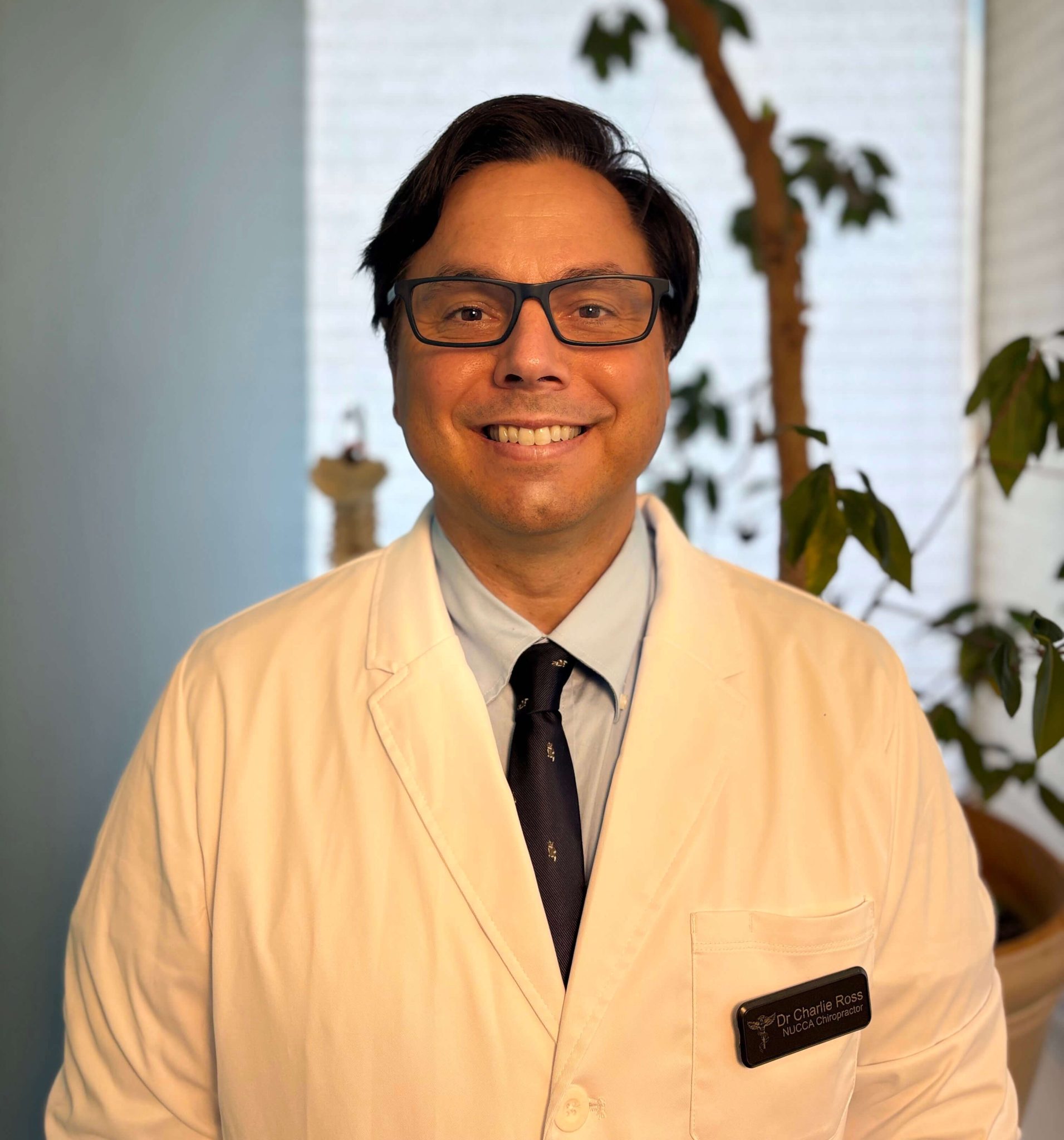

I’m Dr. Charlie Ross DC. One of the most common questions after a slip and fall is: “Why am I still hurting if the ER said nothing was broken?” The short answer is that bone is not the only tissue that takes a hit. Ligaments and tendons heal on a much slower clock than most people expect.
Three overlapping phases
Soft-tissue healing is usually described in three phases. They overlap. They are not a straight line.
Inflammation: the first few days.
Within hours of a sprain or strain, blood and immune cells move into the injured area. Neutrophils peak early. Macrophages follow around day three to five and start clearing debris. Swelling, heat, and pain are part of this phase, not a sign that something is “going wrong.” This window typically lasts a few days to about a week.
Proliferation: about day three through six weeks.
Fibroblasts (in ligaments) and tenocytes (in tendons) lay down new collagen. Early collagen is mostly type III – weaker, more disorganized, and more like scaffolding than the original tissue. New blood vessels form. The area often feels better during this phase, which is why people go back to normal too soon. The tissue is still biologically weak.
Remodeling: six weeks to a year or more.
Type III collagen is gradually replaced by stronger type I collagen. Fibers line up along the lines of stress. Cross-links form. This is the longest phase, and it is the one most people underestimate. Ligament studies still find scar-like tissue months later. Some remodeling continues for a year or two. The repaired tissue is usually less elastic and less organized than the original ligament or tendon. “Healed” does not mean “identical to before.”
Why ligaments and tendons are slow
Muscle has a rich blood supply. Ligaments and tendons do not. Nutrients arrive slowly, so repair is slow.
A mild (grade I) sprain – fibers stretched, little tearing – often feels much better in two to six weeks. A moderate (grade II) partial tear commonly needs six to twelve weeks before the tissue tolerates normal load. A severe (grade III) tear can take many months. Some complete tears, especially inside a joint, do not heal well on their own.
Pain fading is not the same milestone as tissue being ready. That is why re-injury is so common in the “I feel fine now” window.
The upper neck is a special case
After a slip and fall, the ligaments that matter most at the top of the neck are the transverse ligament of the atlas and the paired alar ligaments. They help keep C1 and C2 centered under the skull.
These ligaments have limited blood flow. A sprain here does not always show on a standard ER X-ray. Isolated alar ligament injuries in published case series have often been managed with a rigid collar for one to two months, with symptoms settling over weeks – not days.
The small tendons and muscles at the base of the skull (the suboccipitals, upper trapezius, levator scapulae) usually fire to guard an unstable joint. That guarding can outlast the original sprain. So a person can feel “tight” long after the inflammatory phase is over.
What this means for care
If you fell last week, the tissue is still in early repair. If you fell three months ago and still feel off-center, you are likely in the remodeling phase – or the joint never quite returned to a balanced position, so the muscles never stopped bracing.
Gentle NUCCA care does not speed collagen like a switch. The idea is different: if the atlas can sit more evenly under the skull, the ligaments are not being loaded on a crooked foundation, and the guarding muscles have a reason to stand down while remodeling continues.
Healing time still belongs to the tissue. Alignment is one condition that tissue heals in.
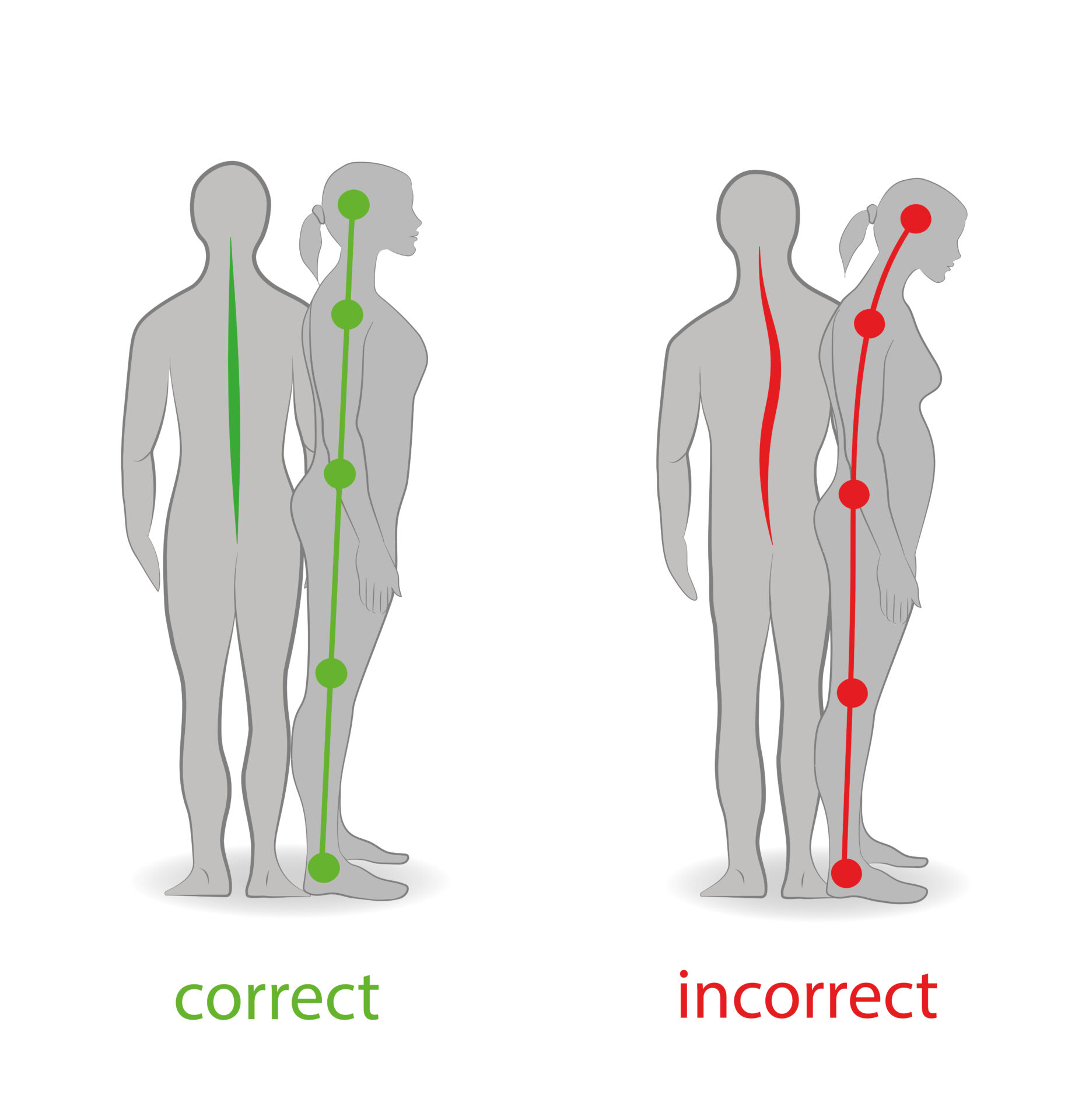
If a fall was recent and you have severe pain, numbness, weakness, or a change in coordination, get medical clearance first. Then, if the lingering problem is alignment and soft-tissue guarding, we can look at the upper neck.
Call (206) 504-2225 to schedule your no-charge consultation.
About the Author