

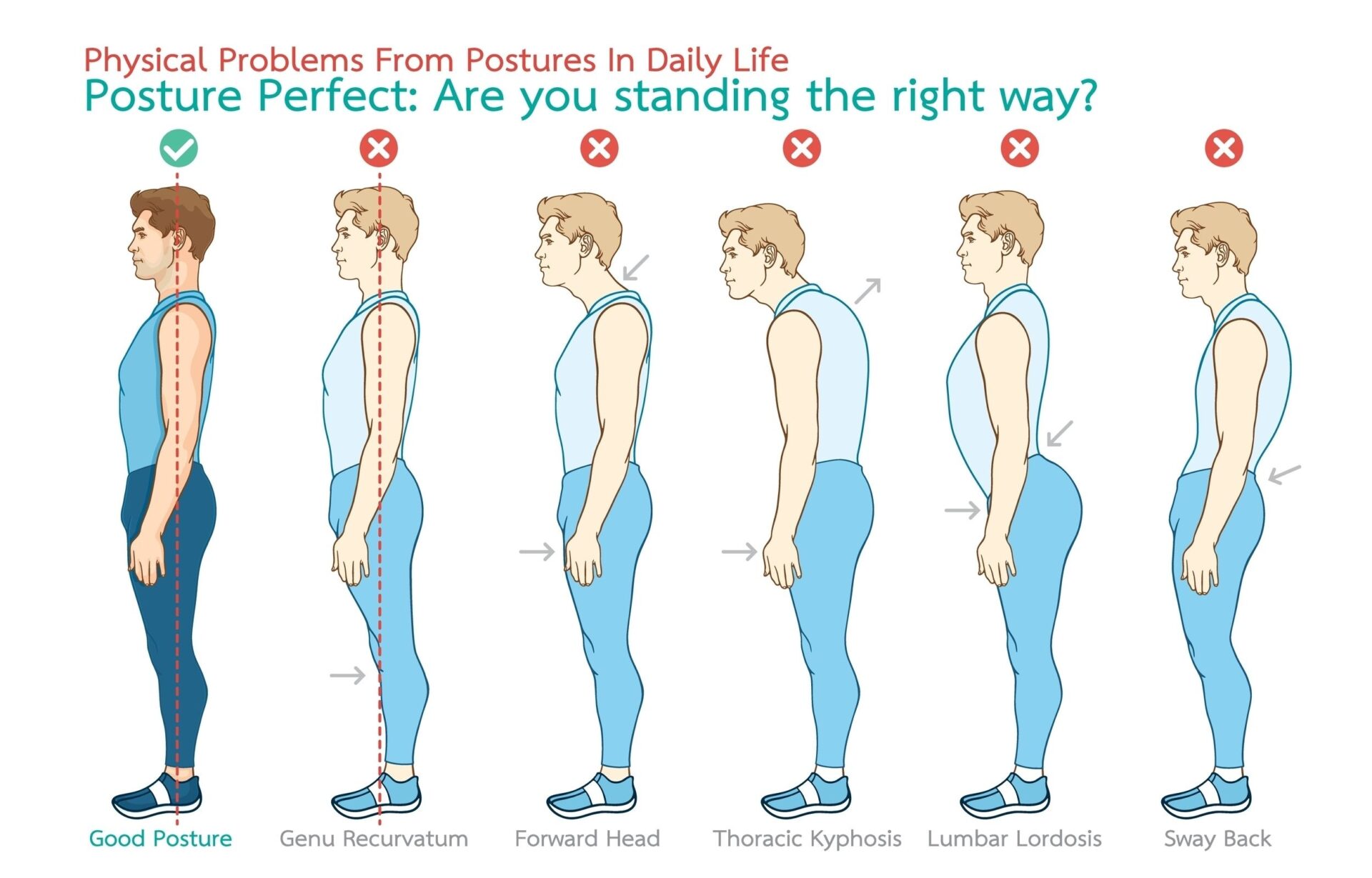
Why Does Postural Balance Matter?
We’ve all heard the commands since we were little: “Sit up straight!”, “Don’t slouch at the table!”, and many other idioms about how we were disgracing Grandma at the dinner table with our curving spines. However, poor posture is not just about poor manners, and good posture is about much more than just having a straight spine. Good posture, or postural balance, is not just the way you sit or stand, it’s about how holding your body the right way can affect your entire health.
Postural balance is key to not just being healthy but staying healthy. It is an essential component to all movement, from sitting upright to running a marathon. Having good postural balance can help with injury prevention and supporting higher levels of athletic performance ability. Good posture can also aid in better motor efficiency meaning that older adults with good postural balance are at less of a fall risk.
Poor postural balance can mean a whole plethora of health problems. For instance, it can put you at a higher risk for injury due to balance dysfunction, increased strain on your muscles, ligaments and joints, reduced mobility and even respiratory and digestive issues.
Simple Ways To Improve Postural Balance At Home

It is never too late to work on improving (or maintaining!) your postural balance- and it doesn’t require a Barre class subscription! Here are some easy ways for you to improve that balance from the comfort of home:
- Stay Active. If you don’t have the funds or time to go to the gym or take a hike no worries. Just pull up YouTube! It has plenty of at-home yoga and Pilates classes and core centric exercises are perfect for improving balance. The best part is they can be tailored to you; pick from a wide range of difficulty levels and times that range in length from 9 minutes to full hour-long classes! Remember what’s important is consistency not intensity.
- Be mindful of your posture in your day-to-day life. Whether you’re washing dishes, watching a movie, or doomscrolling through TikTok, make sure to check that posture every few minutes.
- Don’t let office work get you down (or curved). While staying sedentary for long hours is bad for your overall health, sometimes it can’t be helped, especially in tech-centric Seattle. Some ways to beat tech neck include:
- Take a break from sitting with a little walk around the office or home
- Switch sitting positions often and don’t cross your legs
- Use a lower back pillow to support the curve of your natural back
Why NUCCA Matters
The key to good posture is in the position of your spine which has three natural curves: your neck, mid back, and low back. At the top of the spine sits the atlas (C1) bone. When the atlas bone becomes misaligned, the rest of the body compensates by altering muscle tension or shifting your posture.
NUCCA care is a form of chiropractic care that specializes in correcting imbalances in the upper cervical spine through gentle adjustments. NUCCA care focuses on gently correcting the alignment of the atlas so that the head can be centered properly over the neck and the rest of the body. The goal is not constant twisting and cracking of the whole spine, but rather small, precise corrections that allow the body to stabilize and maintain alignment over time. NUCCA care focuses on restoring proper alignment and supporting healthy nervous system function so the body can operate how it was meant to. Call us or book an appointment today because when your spine is on track, your life is on track.
About the Author