

When vertigo strikes, it can feel like you’ve lost control of your own body—confusing, unsettling, and deeply isolating. It’s more than “dizziness”; it’s a disruption of your sense of balance and spatial orientation. For many, it interferes with daily life-from walking the dog to simply getting out of bed. However, understanding why vertigo happens and what vertigo relief is available can help bring both logic and hope to the conversation.
What Is Vertigo?
Vertigo, or the sensation of movement when there is no movement, such as a spinning motion, is a result of issues with the systems that help your brain sense your equilibrium such as:
- The vestibular system in the inner ear
- Sensory Signals from Neck Area and Eyes
- The brainstem and cerebellum, where balance is integrated
There are also different types of vertigo and it is essential to treatment to determine which type you are experiencing:
- Peripheral vertigo- originates within the inner ear tends to be common and treatable.
- Central vertigo- due to neurological reasons may be complex and require specialized assessment.
Common Causes of Vertigo
Benign Paroxysmal Positional Vertigo (BPPV)
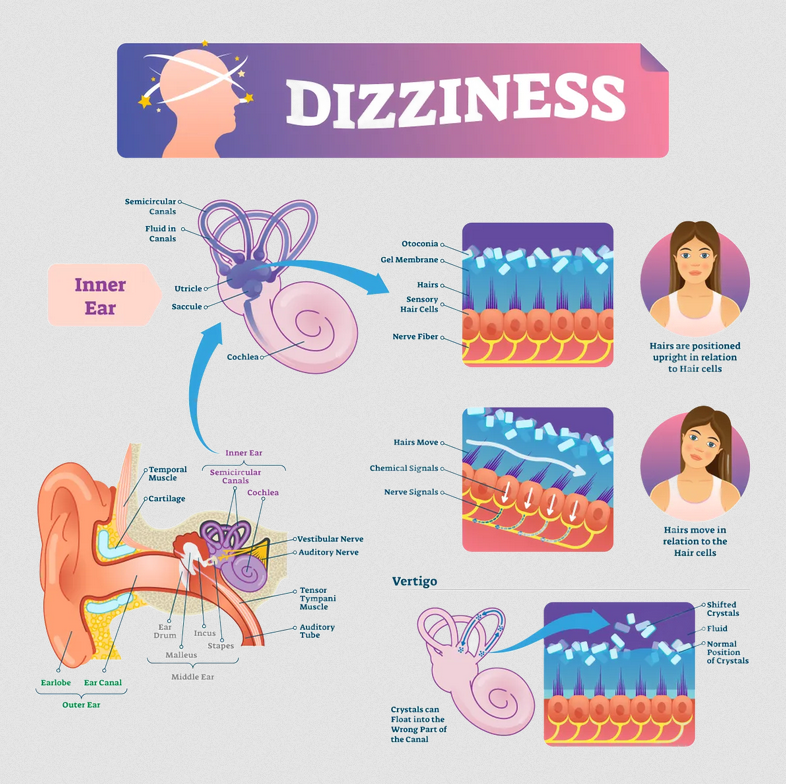
- Caused by “otoconia,” or pieces of displaced calcium carbonate that have accumulated in the semicircular canals.
- Common Triggers – rolling over in bed, looking up, bending over.
- One of the most common underlying reasons for vertigo among adults.
Treatment for BPPV:
- The Epley maneuver, This repositioning maneuver has been shown to be very successful for symptomatic relief and for returning canal function to normal.
Diagnostic & Treatment Approaches
Diagnosis
- The Dix-Hallpike test is the gold standard for diagnosis of the posterior canal BPPV.
Vestibular Rehabilitation:
- Studies show, through structured movement and balance training, your brain can adjust to your vestibular disorders.
- Research confirms that this can help improve balance and relieve the severity of vertigo, primarily when repositioning maneuvers are also used.
This indicates that corrective exercises actually train the brain to compensate for sensory discrepancies and is very important to providing patients with vertigo relief.
What About Neck-Related/Cervicogenic Vertigo?
Some complaints of vertigo are related to proprioceptive disruption from the cervical spine. Proprioception is your body’s internal sense of head and neck position-balance. If those signals are disrupted, conflicting information may make its way to your brain, which feels like vertigo.
Scientific reviews indicate there is moderate evidence that manual therapies, including gentle, specific spinal care, may help reduce dizzy symptoms resulting from neck dysfunction. There is a connection between misaligned cervical segments, altered sensory input, balance symptoms and vertigo relief.
How NUCCA Care Fits In
Your experience deserves an approach to wellness that treats your body’s science and your emotional toughness appropriately. NUCCA stands for National Upper Cervical Chiropractic Association. We’re specialists in precise alignment of your top vertebrae in your neck, C1 – or “atlas” – and C2 – or “axis.”
Therefore, any misalignments to the spine can impact nerve communication and feedback of proprioception. As a result, many people report feeling more stable and secure after an upper cervical NUCCA adjustment, especially when combined with a medical workup and vestibular rehab.
5 Quick Signs that Vertigo Can Benefit from Targeted NUCCA Evaluation
- You have vertigo that persists after a neck injury
- Other symptoms worsen with head movement.
- Traditional BPPV treatment approaches have been inadequate
- You feel neck tension when you get dizzy
- Standard tests do not fully explain your symptoms
Final Thoughts
Vertigo is an actual, quantifiable, and distressing condition is curable through individualized and unique approaches:
- Medical science
- Evidence-based therapies
- Precise cervical alignment
If you don’t like the feel of your balance, the world around you is spinning out of control, and you have doubts about navigating rough terrain – you deserve comfort explained by logic and concern.
Dr. Charlie Ross, DC — NUCCA Chiropractor in Seattle – Here to help guide you on the path back to balance and vertigo relief!
Call to Schedule your No-Charge Consultation: 206-504-2225
About the Author