

Stress is generally thought of as something emotional in nature—deadlines at work, financial concerns, or a hectic schedule. However, it’s actually something that your body feels in a physical manner as well. If your nervous system is under constant stress, it can have an effect on nearly all areas of your body.
By learning how this works, it may help you understand why you’re still feeling certain things even though you’re doing your best to take care of yourself.
The Nervous System: Your Body’s Control Center
The nervous system controls and coordinates nearly everything that your body does. It controls communication between your brain and the remainder of your body.
The main portion of your nervous system is called the autonomic nervous system, which works automatically and has two main settings:
Sympathetic (“fight or flight”) – activates in stressful or emergency situations
Parasympathetic (“rest and repair”) – allows your body to recover, heal, and relax
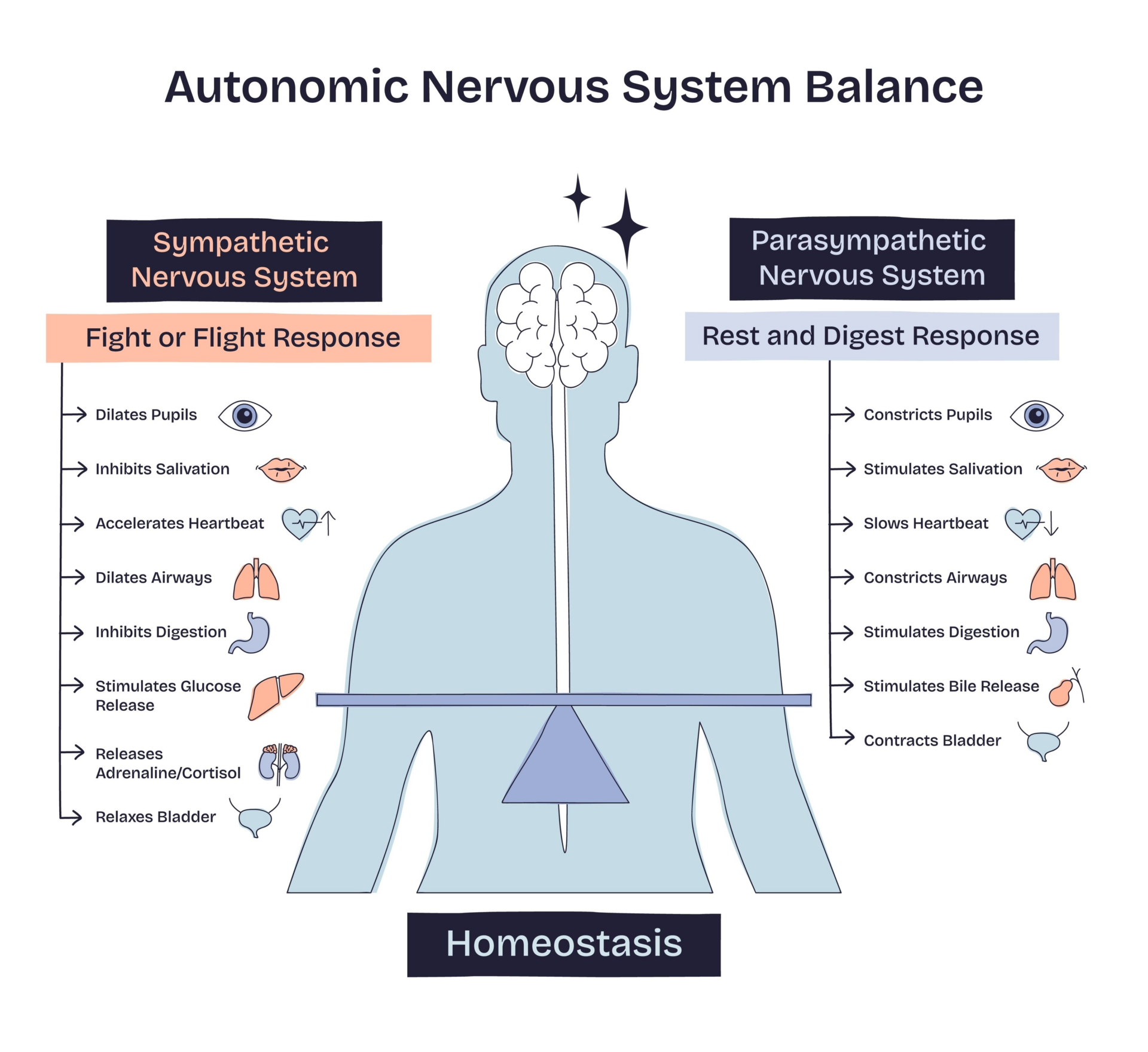
In a healthy individual, the body is in one of these two states throughout the day. When stress is present, the system is activated for a period of time, and then returns to a normal state when the stress is removed.
However, when stress is a constant in an individual’s life, their nervous system may have difficulty returning to a state of relaxation.
What Chronic Stress Does to the Body
However, when a nervous system is in a state of stress for a long period of time, several things can happen.
The body can produce more stress chemicals in the bloodstream. Muscles can stay in a state of tension for a long period of time. The way that blood flows can change, and the ability of the body to rest and recover can become disrupted.
Some of the symptoms that can occur include:
- Frequent headaches or migraines
- Neck and shoulder tension
- Sleep problems
- Fatigue or brain fog
- Increased sensitivity to pain
- Digestive discomfort
- Dizziness or problems balancing
Most people attempt to deal with these symptoms on an individual basis. However, these symptoms can all have a common link: a nervous system in a state of stress.
Physical Stress on the Nervous System
While emotional stress is not the only source of nervous system impact, physical stress can also come into play in the equation.
One of the areas of the body that needs to be examined is the upper cervical spine, which consists of the top two bones in the neck. This part of the body is directly under the base of the skull and shields the lower part of the brain stem, which has a significant role to play in the nervous system.
If the upper cervical spine gets misaligned because of injury, posture, or other factors, abnormal stress can develop in the neck because the brain and the spinal cord run through this part of the body. This can impact the nervous system in some individuals.
Supporting the Nervous System
Helping the nervous system return to its balanced state requires various strategies. Good sleep, stress, physical activities, and nutrition have been important in this aspect.
Another method for some people to restore balance in their nervous systems is upper cervical chiropractic, including NUCCA.
NUCCA stands for National Upper Cervical Chiropractic Association. This method deals specifically with the upper neck area. Unlike other chiropractic methods, NUCCA has a very subtle and specific spinal adjustment, which does not involve twisting and cracking of the spine.
The ultimate purpose of NUCCA is to have a more balanced position of the head, neck, and spine.
How NUCCA May Help Reduce Nervous System Stress
By aligning the upper cervical spine, it can help to reduce unnecessary physical stress in this important part of the body.
By improving spinal and body alignment, NUCCA care can help to:
- Achieve more balance in the spine and body position
- Reduce muscle tension in the neck and shoulder areas
- Enable more efficient brain-body communication
- Help the nervous system go into a “rest and repair” mode more easily
Many people have reported success in alleviating symptoms of chronic tension, headaches, dizziness, and fatigue after receiving NUCCA care for upper cervical alignment.
NUCCA care is not a “cure-all” for everything, but it can be one aspect of a more holistic approach to helping the body regulate and heal itself.
Helping the Body Return to Balance
The nervous system is designed to adapt and recover from stress. However, when stress is constant and ongoing, whether it is emotional, environmental, or physical in nature, the body can have difficulty returning to a state of normal.
Learning about all of the different factors that affect the nervous system can be a key step in a healthier lifestyle.
Some people may find that reducing stress in their lives means making changes to their lifestyle. Others may find that reducing stress means correcting problems in their structure that cause ongoing stress to their bodies. By supporting their nervous systems and reducing unnecessary stress in their lives when possible, people can help their bodies rest, recover, and function as they were meant to.
About the Author