
Tinnitus is one of the most common complaints people bring into this office, and it’s also one of the most frustrating. The ringing, buzzing, or humming in one or both ears. The ENT does a hearing test. The scan looks clean. The diagnosis is often “we can’t find anything” – which is not the same as “nothing is wrong.”
Here’s what a lot of people don’t know. The auditory pathways and the upper cervical spine share real anatomical connections. The cochlea’s blood supply runs through vessels near the base of the skull. The trigeminal nerve, which handles facial sensation, has branches that interact with the auditory system. And the proprioceptive signals from the Atlas and upper neck feed into the same brainstem regions that process sound and balance.
When the head sits off center, that mechanical strain can show up as ear fullness, ringing, or a sense that sounds are distorted. It’s not that the ear itself is broken. It’s that the input arriving at the brain from the neck and the ear is getting mixed together in a way that creates noise.
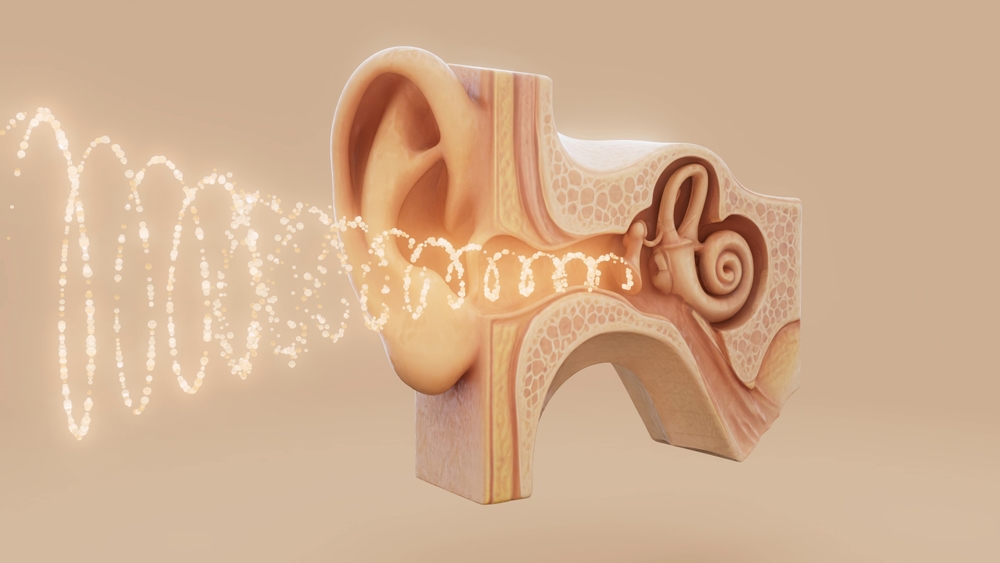
Meniere’s is a different but related story. Episodes of vertigo, hearing loss, tinnitus, and ear pressure that come in waves. The standard workup focuses on the inner ear – fluid dynamics, endolymph pressure. That’s legitimate. But patients who don’t fully respond to diuretics or dietary changes often have an upper cervical component that hasn’t been measured. The same crossroads where sympathetic and parasympathetic fibers pass near C1 and C2 also sits close to structures involved in balance and hearing.
NUCCA doesn’t treat the ear directly. What we do is measure Atlas alignment with specific imaging and use a gentle, non-twisting correction to center the head. When that mechanical strain reduces, some patients notice the ringing quiets, the fullness eases, or the Meniere’s episodes space further apart. Not everyone. But for the ones it helps, it’s the piece that was missing from every other approach they tried.
If you’ve been living with ear symptoms that no scan has explained, the upper neck is worth a look. It’s not a promise. It’s a measurement you haven’t had yet.
Dr. Charlie Ross, DC
NUCCA Upper Cervical Care
4345 Roosevelt Way NE, Seattle, WA 98105
(206) 504-2225
Reference
Bechter K. The role of the upper cervical spine in tinnitus and Meniere’s disease: a review of anatomical and clinical evidence. Frontiers in Neurology. 2021. Discusses cervicogenic contributions to auditory and vestibular symptoms through shared brainstem pathways.
About the Author